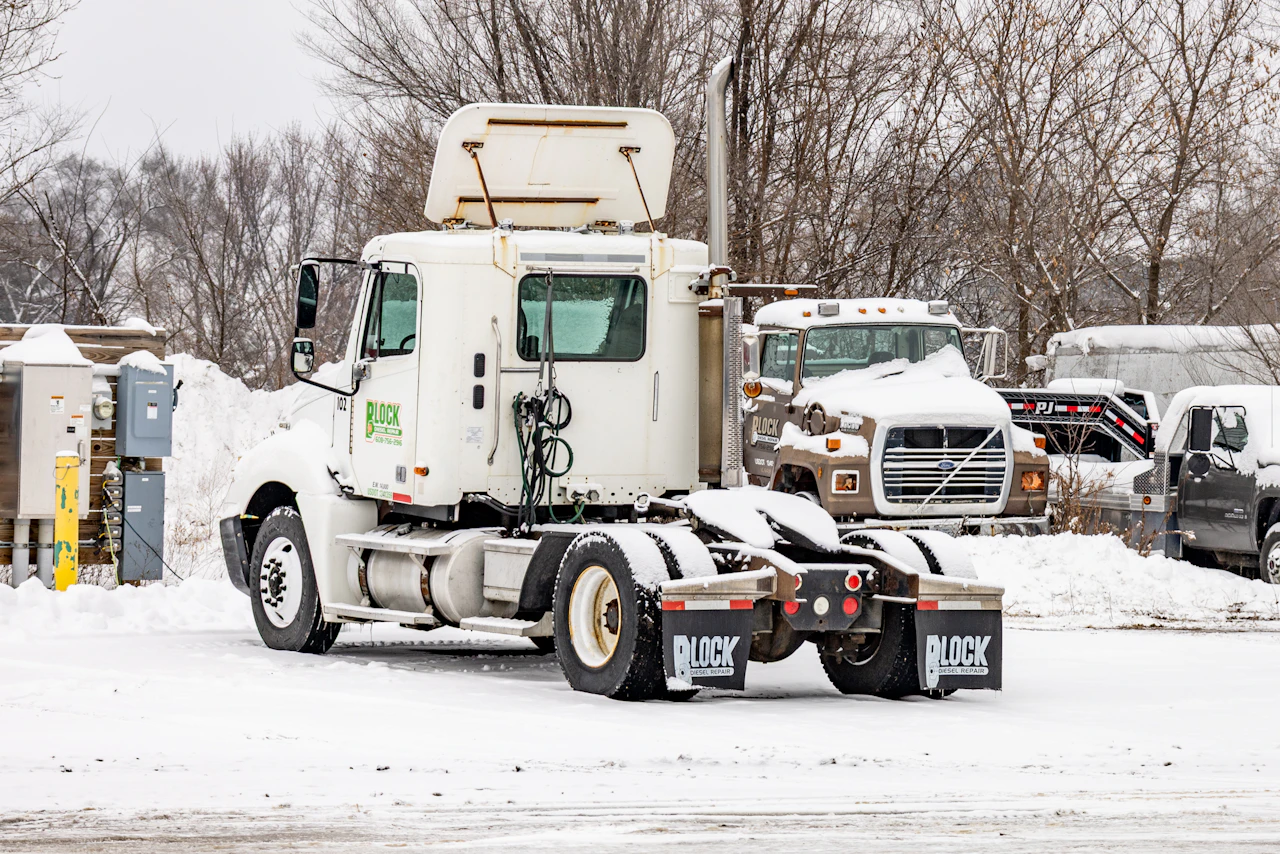
Winter in Wisconsin doesn’t play around. When the snow starts flying and temps dive below zero, your fleet can go from running smoothly to stuck on the shoulder in no time. Whether you’re managing heavy-duty semis or medium-duty box trucks, winter readiness is critical to keeping operations moving and avoiding costly breakdowns.
So the big question is: Is your fleet truly ready for the months ahead?
Let’s walk through a cold-weather prep checklist that’ll keep your trucks reliable, roadworthy, and profitable, no matter how brutal the forecast gets.
The Winter Threats Your Fleet Will Face
Before diving into solutions, let’s talk about what you’re up against:
- Diesel fuel gelling when temps drop below 15°F
- Frozen air brake lines from moisture buildup
- Battery drain from extreme cold starts
- Corrosion from road salt and brine
- Cracked hoses and brittle belts
- Low tire pressure and poor traction on icy roads
Wisconsin winters aren’t just cold, they’re relentless. Which means your preventive maintenance plan has to be just as tough.
Step 1: Winterize Your Fuel System
If you’ve ever had a truck stall in January, you know fuel gelling is no joke. Paraffin wax in diesel thickens in cold weather, blocking filters and starving your engine.
Here’s what to do:
- Switch to a winter-blend diesel (No. 1 or a blended No. 1/2 mix)
- Add anti-gel additives with every fill-up
- Replace fuel filters regularly (clogged ones gel faster)
- Drain water separators more often
Pro tip: Park trucks in a heated bay overnight whenever possible.
Step 2: Protect Your Air Brakes
Air brake systems hate moisture, and Wisconsin’s cold will freeze any condensation left in the tanks or lines.
To keep brakes responsive:
- Drain air tanks daily in freezing conditions
- Check for leaks in air lines, valves, and compressors
- Replace air dryer cartridges if they’re past service intervals
- Inspect slack adjusters for proper tension and corrosion
A frozen brake chamber on the highway? That’s a quick way to ruin your day, and delay your deliveries.
Step 3: Test and Charge Your Batteries
Cold cranks kill weak batteries. If your fleet batteries are more than 2–3 years old, winter could expose their age.
Make sure to:
- Load test every battery before peak winter hits
- Check connections for corrosion and secure terminals
- Use winter-grade battery blankets or insulators if needed
- Confirm alternators are charging properly
Low voltage leads to starting issues, poor ECM performance, and failed aftertreatment system regens.
Step 4: Inspect Your Cooling System
Even though it’s cold outside, your engine still generates massive heat. A failing coolant system can cause major winter downtime.
Key checks:
- Flush and fill with winter-rated antifreeze (50/50 mix)
- Pressure test hoses and radiator for leaks
- Confirm the fan clutch is engaging at low speeds
- Look for cracks in brittle heater hoses
Don’t forget to check the DEF tank heater too, Diesel Exhaust Fluid freezes at 12°F and can disable your emissions system if left unchecked.
Step 5: Monitor Tire Pressure and Tread Depth
Tire pressure drops about 1 PSI for every 10°F drop in temperature. Low pressure in icy conditions means bad traction, uneven wear, and a higher risk of blowouts.
What to do:
- Check and adjust tire pressures weekly
- Inspect tread depth, you’ll need maximum grip on snow-packed roads
- Rotate tires more frequently during winter
- Replace worn steer tires before slick conditions get worse
Traction is your best friend when black ice shows up without warning.
Step 6: Don’t Skip Undercarriage Maintenance
Slush, salt, and sand do a number on everything underneath your truck. Think rot, corrosion, and seized components.
Combat it with:
- Frequent undercarriage washes to rinse off brine
- Anti-corrosion sprays on suspension, frame rails, and brake hardware
- Checking and greasing kingpins, U-joints, and fifth wheel plates
This is especially critical for fleets running daily routes with constant exposure to treated roads.
Step 7: Review Your Emergency Kits
Even the best-prepped fleet can face an unexpected breakdown. Don’t let your drivers get stranded without the basics:
- Heavy-duty jumper cables
- Tire chains
- Air line antifreeze
- Fuel additive
- Hand warmers and thermal blankets
- Flashlights, batteries, and first aid kits
Don’t Wait for a Breakdown
Winter fleet prep is about protecting your assets, drivers, and deadlines. A properly winterized fleet performs better, lasts longer, and saves you serious money on emergency repairs and missed revenue.
In southern Wisconsin, where lake-effect snow and single-digit temps are the norm, you’ve got to stay ahead of the weather, not react to it.
Is your fleet winter-ready? Don’t leave it to chance. Schedule a full cold-weather inspection with Block Diesel Repair Inc. in Janesville, WI. We’ll help you lock in reliability before the snow flies, with expert diagnostics, parts protection, and a maintenance plan that keeps your trucks rolling through the cold. For more information, read our article on common winter brake mistakes.
.svg)
.svg)
.svg)