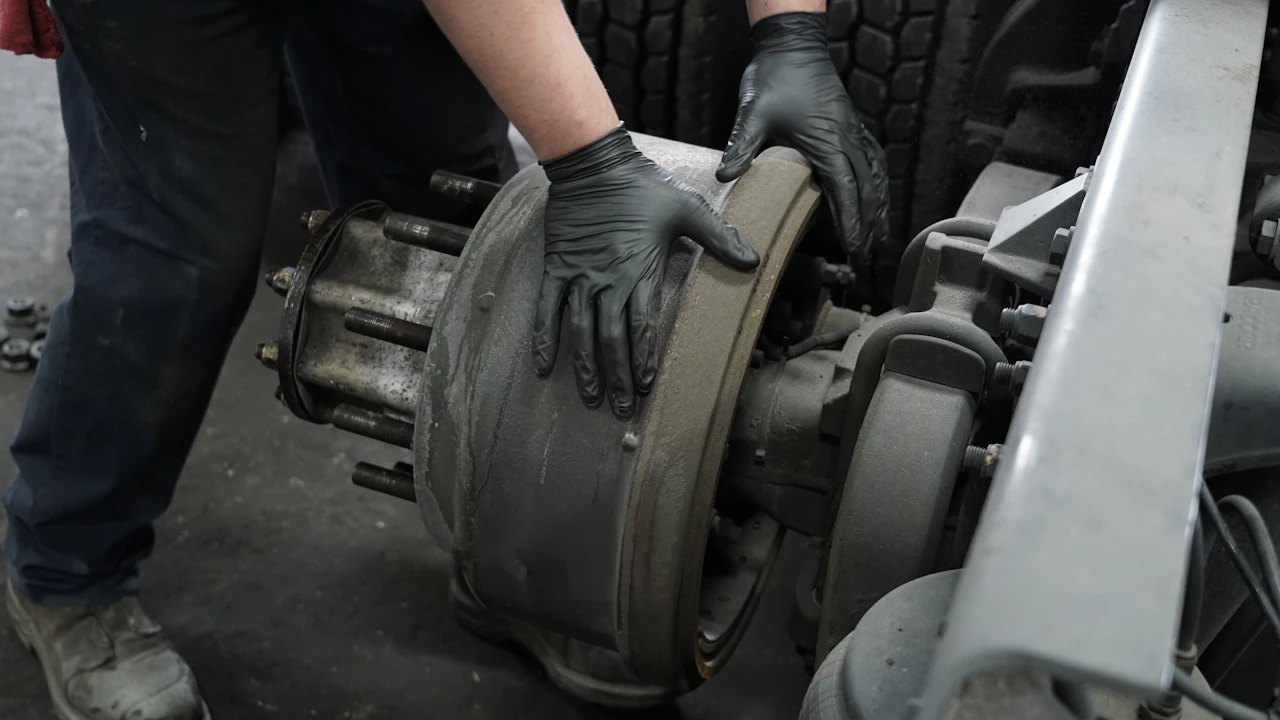
When the mercury drops in Janesville, WI, the roads get slick, the air gets dry, and your truck’s braking system faces an entirely new set of challenges. While winter weather is hard on every part of a heavy-duty truck, it’s especially brutal on air brake systems, and even small maintenance oversights can snowball into dangerous failures.
To keep your rig (and everyone around it) safe this season, you need to know what to look out for, and what to avoid. So let’s break down 5 common winter brake mistakes that truck drivers and fleet operators make, and how to prevent them.
1. Failing to Drain Air Tanks Regularly
Let’s start with the big one: moisture in your air system.
Air brakes rely on clean, dry compressed air to function. But in winter, even a small amount of trapped water can freeze inside lines and valves, causing:
- Brake lock-up
- Loss of braking power
- Inconsistent or delayed braking response
Mistake: Skipping your daily air tank drain, especially after overnight parking in cold weather.
Prevention: Drain your primary and secondary tanks daily, and inspect the air dryer regularly. Replace the desiccant cartridge if it's saturated or clogged. This simple habit keeps moisture from freezing your brake system solid.
2. Ignoring Slack Adjuster Travel Limits
Your slack adjusters control how far the pushrod travels to engage the brake shoes. In winter, colder temperatures can cause stiff grease, metal contraction, and even ice buildup, all of which increase slack adjuster strain.
Mistake: Assuming automatic slack adjusters don’t need inspection or maintenance.
Prevention: Manually check pushrod stroke length with the brakes applied. If it exceeds OEM specs, you’re risking slow brake response or incomplete brake engagement, especially critical on icy roads.
Grease your slack adjusters with cold-rated grease and inspect for corrosion or binding.
3. Using Improper Lubricants (or None at All)
Cold weather turns the wrong grease into peanut butter. And when you don’t lubricate your S-cam bushings, clevis pins, and adjusters, everything starts to grind, bind, and eventually seize.
Mistake: Using standard grease that thickens in freezing temps, or worse, skipping lubrication altogether.
Prevention: Use low-temperature, synthetic grease designed for winter climates. Lubricate:
- Slack adjusters
- S-cam tubes
- Brake camshaft bushings
- Return springs and clevis pins
In Janesville’s bitter cold, frozen linkages mean no brake application, and that’s a risk you can’t afford.
4. Parking with Wet Brake Components
After driving through snow, slush, or a wash bay, your brake shoes and drums are likely wet. If you park the truck and the temperatures drop, they can freeze together, causing the shoes to stick inside the drum.
Mistake: Parking immediately after a wet drive without allowing the brakes to dry.
Prevention: Before shutting down for the night, gently apply the brakes a few times to heat the drums and evaporate moisture. Alternatively, avoid setting the spring brakes if the parking surface is flat and secure.
Frozen brake shoes won’t release, and trying to force movement can damage the drum, shoes, or chamber.
5. Ignoring ABS Warning Lights
Your ABS (Anti-lock Braking System) is your best friend on slippery roads. But when sensors fail, or connectors corrode, drivers sometimes ignore that warning light on the dash, or assume it's “just a sensor.”
Mistake: Disregarding the ABS light in winter conditions.
Prevention: When that light comes on, scan the system immediately. Common winter ABS issues include:
- Damaged sensor wiring
- Frozen or dirty tone rings
- Moisture in connectors
Without a functioning ABS, your wheels can lock up during hard stops, especially dangerous on icy Wisconsin roads.
Don’t Forget the Undercarriage
In Wisconsin winters, salt and road brine cling to everything, especially air lines, valves, and brake components. Left unchecked, this causes corrosion that weakens fittings and eventually leads to air leaks or component failure.
Pro Tip: Wash your undercarriage regularly to remove corrosive buildup. Inspect air lines for dry rot, and apply protective coatings to exposed metal where possible.
Get Ahead of Winter Brake Issues
When it comes to heavy-duty truck safety in winter, brakes are the first and last line of defense. And while the risks increase when the temps drop, most cold-weather brake failures are 100% preventable.
By avoiding these five common mistakes and staying proactive with your air system maintenance, lubrication, and inspections, you can protect your truck, your freight, and everyone on the road.
Need a winter brake inspection or repair in southern Wisconsin? Trust the experts at Block Diesel Repair Inc. in Janesville to get your rig winter-ready and road-safe, before small mistakes become big problems. For more information, read our article on suspension repairs fleet owners should know.
.svg)
.svg)
.svg)