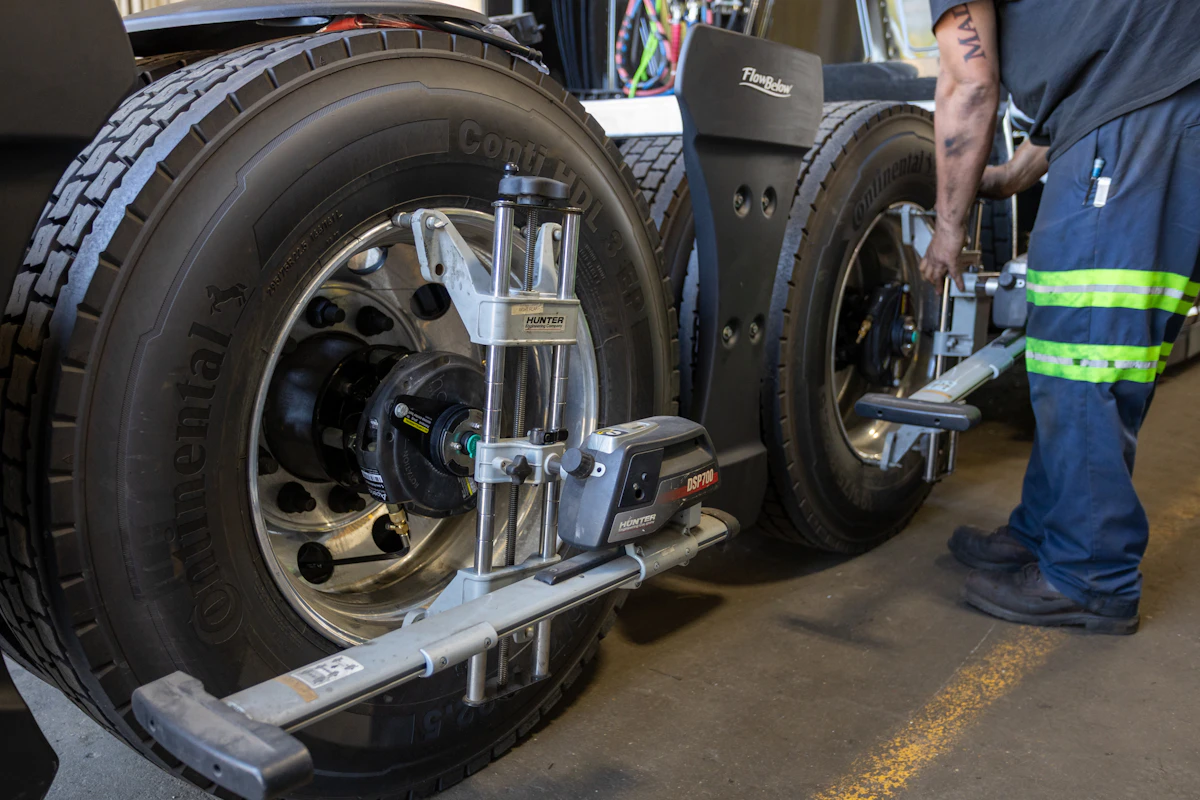
A heavy-duty truck can hide a lot of problems until the repair bill gets ugly. Truck alignment is one of those problems. At first, you may notice a slight pull, a crooked steering wheel, or tire wear that looks a little off.
Easy to ignore, right? Well, that small steering issue can turn into worn tires, damaged suspension parts, poor handling, and extra fuel costs before you know it.
For truck owners and fleet managers in Janesville, staying ahead of wheel alignment problems helps protect uptime, safety, and tire life. Heavy-duty trucks work hard, especially when hauling loads, hitting rough roads, or running long routes through changing Wisconsin weather. That strain affects your steering, suspension, and tires every mile.
What Truck Alignment Actually Means
Truck alignment refers to the angles of your wheels and axles in relation to the road, frame, and each other. The goal is simple: your tires should roll straight, evenly, and with proper contact on the pavement.
On heavy-duty trucks, alignment can involve the steer axle, drive axles, trailer axles, and related steering components. A technician checks angles like toe, camber, and caster, then adjusts them where possible.
Toe measures whether the tires point slightly inward or outward. Camber measures the tire’s tilt from top to bottom. Caster affects steering return and stability. These angles may sound small, but a tiny change can scrub rubber off your tires faster than you’d expect.
Your suspension also plays a major role. Heavy-duty trucks commonly use leaf springs or air suspension to support weight and absorb road impact. Shock absorbers help control bounce and rebound. If these parts wear out, loosen, or shift, your alignment can suffer too.
Warning Signs Your Truck Needs an Alignment
You do not need to be a technician to spot alignment trouble. Your truck usually gives you clues.
One of the most common signs is pulling. If your truck drifts left or right on a flat road, your alignment may be off. A little road crown is normal, but constant correction is not.
A crooked steering wheel is another red flag. Your truck may still travel straight, but if the wheel sits off-center while driving, something needs attention.
You may also notice vibration, poor steering response, or a feeling of wandering at highway speeds. That can make long drives tiring and risky. If your truck feels like it floats across the lane, your steering alignment deserves a proper inspection.
Common warning signs include:
- Truck pulls left or right
- Crooked steering wheel
- Uneven tire wear
- Steering wheel vibration
- Wandering at highway speeds
- Poor steering response
Why Misalignment Happens
Heavy-duty trucks live a rough life. Potholes, curbs, jobsite entrances, railroad crossings, and uneven loading can all knock alignment out of spec. One hard hit may be enough.
Normal wear also plays a part. Tie rods, bushings, bearings, shocks, leaf spring hangers, and other suspension parts loosen over time. Once those parts move more than they should, your tires stop tracking correctly.
Load weight matters too. If cargo is unevenly distributed, your suspension may compress more on one side. That changes ride height and can affect alignment angles. Over time, this creates stress across tires, steering, and suspension components.
Even repairs can change alignment. Replacing steering parts, suspension components, axle parts, or tires should often be followed by an alignment check. Otherwise, new parts may wear out faster than they should.
Why You Shouldn’t Wait
Waiting for heavy-duty truck alignment service can cost more than the alignment itself. Tires are usually the first casualty. Once your tires start scrubbing across the road instead of rolling cleanly, tread disappears fast.
Poor alignment also increases rolling resistance. Your engine has to work harder to move the truck, especially under load. That can affect fuel economy and put extra strain on the driveline.
Safety is the bigger issue. A misaligned truck may not track straight during braking, lane changes, or emergency maneuvers. Add rain, snow, ice, or a heavy trailer, and that small pull can become a real handful.
Misalignment can also mask other problems. A worn shock absorber, loose steering component, failing wheel bearing, or damaged suspension part may feel like “just an alignment issue.” A proper inspection helps catch those problems before they turn into roadside downtime.
How Alignment Affects Tire Life
Tires are among the highest operating costs for a truck. Bad alignment eats them alive.
Toe problems often create feathered tread wear. Camber problems can cause one shoulder of the tire to wear. Suspension problems may cause cupping or patchy wear. Once those patterns start, rotating the tires may help a little, but it will not fix the root cause.
A good semi truck alignment helps the tire meet the road evenly. That means better tread life, smoother handling, and fewer early replacements. For fleets, that adds up quickly across multiple trucks and trailers.
Check tire wear during routine inspections. Run your hand across the tread and look for uneven edges. Compare the inside and outside shoulders. If one side looks chewed up, your truck is trying to tell you something.
Alignment and Suspension Go Hand in Hand
You cannot separate alignment from suspension health. The suspension supports the truck and cargo while absorbing road impacts. Heavy-duty trucks may use leaf springs for strength and reliability or air suspension for adjustable load support and ride comfort.
Shock absorbers also matter. They control rebound after bumps and help keep tires planted on the road. If shocks wear out, the tires may bounce, cup, or lose steady contact with the pavement. That can make alignment symptoms worse.
Before adjusting alignment, a technician should inspect key parts. Loose steering linkage, worn bushings, cracked leaf springs, damaged hangers, bad shocks, or wheel-end issues can prevent a proper alignment from holding. Fix the worn parts first, then align the truck.
What Happens During a Professional Alignment
A proper diesel truck alignment starts with inspection. The technician checks tire condition, ride height, steering components, suspension parts, and wheel-end condition. If something is loose or damaged, it needs to be repaired before alignment adjustments.
Next, the truck is measured with alignment equipment. The technician compares the readings to the vehicle's proper specifications. Then they adjust the applicable angles, depending on the axle, setup, and component condition.
The final step is verification. The technician confirms the readings, checks the steering wheel position, and may road-test the truck. A good alignment should leave the truck tracking straight, steering predictably, and wearing tires more evenly.
Practical Tips to Protect Your Alignment
Protecting your alignment starts with consistent inspections and smart driving habits.
Follow these simple tips:
- Check tire wear regularly
- Monitor tire pressure
- Inspect suspension components
- Avoid hard impacts with potholes
- Schedule alignments after suspension repairs
- Balance cargo weight properly
Do not brush off small changes. A slight pull today can become a ruined steer tire tomorrow.
Keep Your Truck Alignment on Track
Truck alignment affects far more than steering feel. It protects your tires, suspension, fuel efficiency, safety, and uptime. If your truck pulls, wanders, vibrates, or wears tires unevenly, do not wait for the problem to get worse.
For dependable Janesville truck alignment support, contact Block Diesel Repair Inc. Schedule an inspection and keep your truck tracking straight before a small issue turns into a costly repair.
.svg)
.svg)
.svg)